Guide
Hot Pilates vs hot yoga
Hot Pilates and hot yoga share the heat but not the work. Hot Pilates is a strength class: core, glutes and muscular endurance trained through controlled, low-impact resistance. Hot yoga is a breath-led practice, moving through postures and flowing sequences where the heat deepens the stretch and steadies the mind.
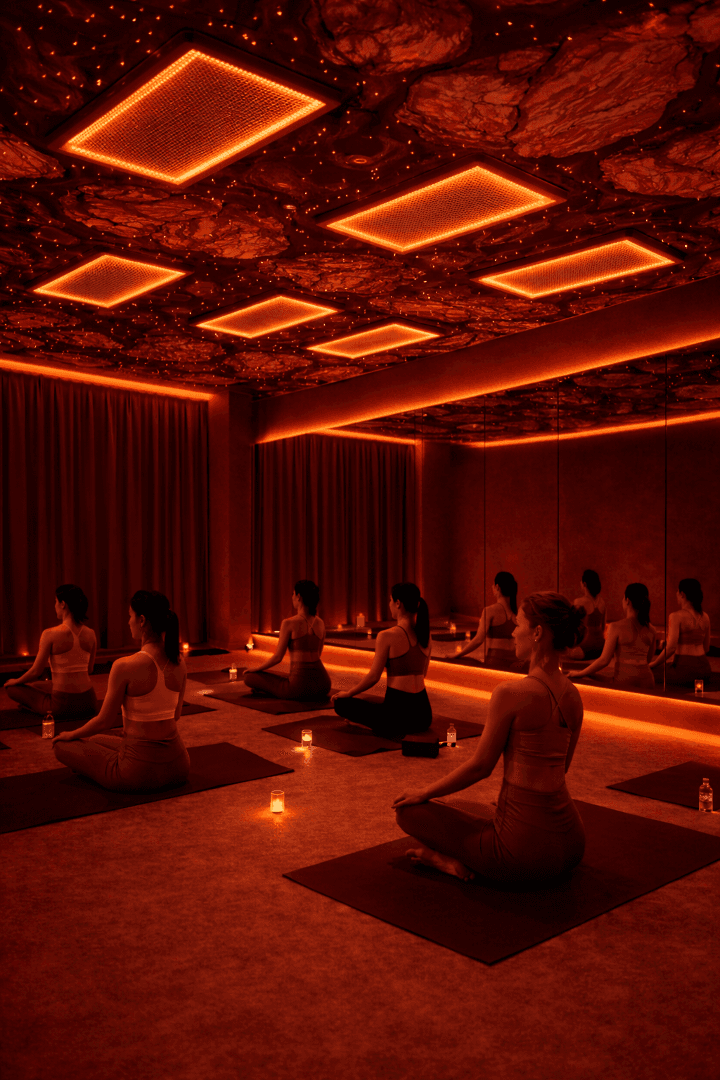
At Bare Wellness, a boutique studio opening soon inside Bloom Arjaan by Rotana on Saadiyat Island, both classes run in the Open Studio under infrared heat. This guide explains how each one feels, what each trains, and how to choose between them, or make room for both.
At a glance
The difference at a glance
Same heat
Both classes run under infrared heat in the Open Studio, so the warmth is the constant across the two practices.
Different work
Hot Pilates trains core and strength through controlled resistance. Hot yoga moves with the breath through flowing postures and longer holds.
Both low impact
Neither class involves impact. The challenge comes from heat, control and sustained effort rather than jumping or heavy weights.
You can do both
The two pair well across a week: hot Pilates for strength, hot yoga for mobility and breath. Together they cover most of what a routine needs.
The heat is the same, the work is not
Both classes take place in the Open Studio, where infrared heat warms the body directly instead of simply heating the air. The warmth builds gradually through the class, muscles loosen sooner, and sweat arrives earlier than it would in an unheated room. That much is shared.
Everything else is the work itself. Hot Pilates stays Pilates and hot yoga stays yoga. One is a strength and endurance class that happens to be heated. The other is a breath-led practice that the heat deepens. Choosing between them means choosing between those two kinds of effort.
What hot Pilates trains
Hot Pilates is mat Pilates with the intensity turned up by warmth. Classes work through core series, glute and hip sequences and slow, controlled strength blocks, all low impact and all driven by precision. The heat does not change the exercises. It changes how honest they feel, because warm muscles reach further and fatigue arrives with less warning.
Expect to hold positions while small movements do the work, and to stabilize through your center while your arms and legs move. The tiredness afterward is muscular, not breathless. Grip socks are required, as in every mat class. The hot Pilates page covers the full class in more detail.
What hot yoga trains
Hot yoga is breath-led. Postures link together with the breath, flowing sequences build heat of their own, and longer holds let you settle deeper into a shape than a cool room would allow. The emphasis sits on mobility, balance and attention rather than on muscular endurance.
It still works the body. Standing sequences ask real effort from the legs, balances demand focus, and a heated flow raises the heart rate more than most people expect. But the through line is the breath, and the class ends somewhere quieter than it began. The unheated version of this practice is covered on the yoga in Abu Dhabi page.
Which one should you choose?
Start from what you want your body to feel like in three months. If the answer is stronger, more stable and more defined through the center, hot Pilates is the closer match. If the answer is looser, calmer and more mobile, hot yoga is. Neither answer is wrong and neither class asks you to commit to one camp.
For a wider comparison of the two disciplines outside the heat, Pilates vs yoga walks through the same decision without the sweat. If you are already training elsewhere, think about what your week is missing rather than what it already has. Then let these markers settle it:
- Choose hot Pilates for core strength, glute work and muscular endurance
- Choose hot yoga for mobility, breath work and a quieter mind
- Choose hot Pilates if you like precise, coached technique
- Choose hot yoga if you like moving continuously with the breath
- Choose both if you want strength and mobility covered in one timetable
Hot classes on the timetable
Both classes run in the Open Studio at Bare Wellness, inside Bloom Arjaan by Rotana on Saadiyat Island. The timetable at opening carries more than sixty classes a week across mornings, evenings and weekends, so hot Pilates and hot yoga each appear often enough to build a rhythm around either, or around both.
A simple pairing works well: hot Pilates when you want to be worked, hot yoga when you want to be unwound. Two heated classes a week, spaced apart, is a comfortable starting point. Booking runs on the website and the iOS app, and full classes carry a waitlist that notifies everyone waiting when a spot opens, so the first to book keeps it.
Before your first hot class
Bring a towel and water to every hot class, and hydrate through the day rather than in the hour before. Wear fitted clothing that breathes. Arrive ten minutes early for a first visit so there is time to check in, set up and let your body adjust to the warmth before the work begins.
Heated classes are not for every body on every day. If you are pregnant, have a heart condition or blood pressure concerns, or simply feel unwell, speak to your doctor before booking a hot class. You can also flag any condition in your member profile so instructors know how to support you.
Good to know
Frequently asked
- Is hot Pilates harder than hot yoga?
- They are hard in different ways. Hot Pilates fatigues muscles through slow, controlled endurance work, while hot yoga challenges balance, breath control and range. Most people find the one that targets their weaker area harder, which is often a good reason to book it.
- Do hot Pilates and hot yoga use the same heat?
- Yes. At Bare Wellness both run in the Open Studio under infrared heat, which warms the body directly rather than only the air. What changes between the two classes is the work itself, not the room.
- Which burns more calories, hot Pilates or hot yoga?
- It depends on the class and how you work, and sweat is not a reliable measure of either. A flowing hot yoga class can raise the heart rate more, while hot Pilates keeps muscles under load longer. Choose by training goal rather than by calorie estimates.
- Can beginners take a hot class?
- Yes, with sensible pacing. Take breaks when you need them, drink water through the class and expect the heat to feel like work in itself at first. If you are new to heat or to exercise, or you have a medical condition, speak to your doctor first.
- Can I do hot Pilates and hot yoga in the same week?
- Yes, and they pair well. Hot Pilates covers strength and core endurance, hot yoga covers mobility and breath, so alternating them gives a balanced week. Leave a day between heated classes when you start, and see how your body recovers.
- What should I bring to a hot class?
- A towel and water, plus fitted clothing that breathes. Grip socks are required for mat Pilates classes, including hot Pilates. Arrive ten minutes early on a first visit so you can settle in before the room starts to work on you.
Keep reading
Saadiyat Island, Abu Dhabi
Begin your Bare ritual.
We open soon. Founding memberships are open by invitation: leave your details and your invitation opens straight away.