Beginner guide · Bare Wellness

What to expect at your first Pilates class

Your first class is simpler than it looks. Book a beginner-friendly session, arrive ten minutes early in fitted clothing and grip socks, and let the instructor know it is your first time. They take care of everything else.

A first-class kit laid out beside a reformer: grip socks, a folded towel, a water bottle, a toning ball and light hand weights in soft morning light

The short version

Four things to know before you go

  • 01

    Book a beginner class

    Classes are labelled by level. Pick a beginner-friendly session on the website or app, where the pace is set for people just starting out.

  • 02

    Arrive ten minutes early

    That covers check-in, meeting your instructor and getting set up on your mat or reformer without a rush.

  • 03

    Grip socks required

    Reformer and mat classes need grip socks for hygiene and grip. Wear fitted clothing so your instructor can see your alignment.

  • 04

    The instructor guides it all

    Springs, setup, pacing and any changes are handled for you. Your only job is to follow along and ask questions.

How the first hour goes

The first hour, step by step

01

Before you go

Book your first class

Booking runs through the website and an iOS app that launches with the studio. Browse the schedule, filter for beginner-friendly sessions and reserve a spot. If a class is full, join the waitlist and we notify you the moment a place opens so you can book it.

Not sure which format to pick? Mat Pilates is the gentlest way into the fundamentals. Reformer Pilates is more supported than it looks, since the springs assist as much as they resist. Either one is fine for a first class.

One thing worth knowing about cancellations: they are free up to six hours before class and your credit comes back. Inside that window the class is forfeited, so book times you can actually keep.

02

The night before

Pack the bag

Wear fitted, comfortable clothing. It lets your instructor see your alignment during class, which loose fabric tends to hide. Leggings and a fitted top work well for most people.

Grip socks are required for reformer and mat classes. They keep you steady on the carriage and the mat, and they are the one thing worth buying before you arrive. Bring water. For a hot class, bring a towel too and drink plenty beforehand.

Skip a heavy meal in the two hours before class. A light snack is fine. If you have an injury, are pregnant or have a medical condition, speak to your doctor first, then note it in your member profile.

03

On the day

Arrive and check in

Follow the road signs to the valet stand between the Park View residences and Bloom Arjaan by Rotana, hand over your keys and tell them you are here for Bare Wellness. It is complimentary, so there is nothing to pay and no space to find. Walk through the hotel lobby and out the far side, and the studio is there, facing NYU Abu Dhabi.

Check in at the desk, find your room and say hello to your instructor. Tell them it is your first class. It changes how they teach you, with more attention, more explanation and quieter corrections through the session.

The studio has two rooms inside Bloom Arjaan by Rotana on Saadiyat Island. Yoga, mat Pilates, barre and hot classes run in the Open Studio. Reformer classes run in the Reformer Studio, where ten beds face one instructor. Your spot is set up before the hour starts.

04

In the room

On the equipment

Before class, your instructor sets up the equipment. On the reformer that means choosing your springs and showing you the carriage, footbar and straps. On the mat it means props and positioning. You are not expected to figure any of this out on your own.

During class, the cues are in plain language. You might hear terms like neutral spine or tabletop, and each one is explained the first time it comes up. Instructors hold recognised certifications such as STOTT, BASI and Polestar, and small classes mean they can watch everyone in the room.

If a movement does not work for your body, they give you an easier version, quietly and without any fuss. Taking that option is not failing the class. It is doing the class properly for where you are today.

05

Afterwards

How you’ll feel

Most first-timers walk out feeling taller and more awake than tired. Pilates works the deep stabilising muscles rather than chasing exhaustion, so you feel worked but not wiped out.

Over the next day or two, expect a little soreness in places you did not expect, usually the deep core, inner thighs and the muscles between your shoulder blades. It is normal and it passes. Gentle walking and water help.

One class teaches you the basics, and consistency does the rest. Two classes a week is a good rhythm to aim for in your first month.

Where you will be

Two rooms, one hour

The Bare Wellness Reformer Studio: a long room of reformers under warm arched lighting

The Reformer Studio

Ten beds, one instructor

Reformer classes run in a room built around exactly ten machines. That number is the point: it is small enough for the instructor to see every body in the room and correct quietly as the hour unfolds.

Your bed is ready before you arrive. Springs, straps and headrest are set for the class, and your instructor changes them for you as the work changes.

Open studio with arched mirrors, uplighting, and rolled mats

The Open Studio

Mat, barre, yoga and heat

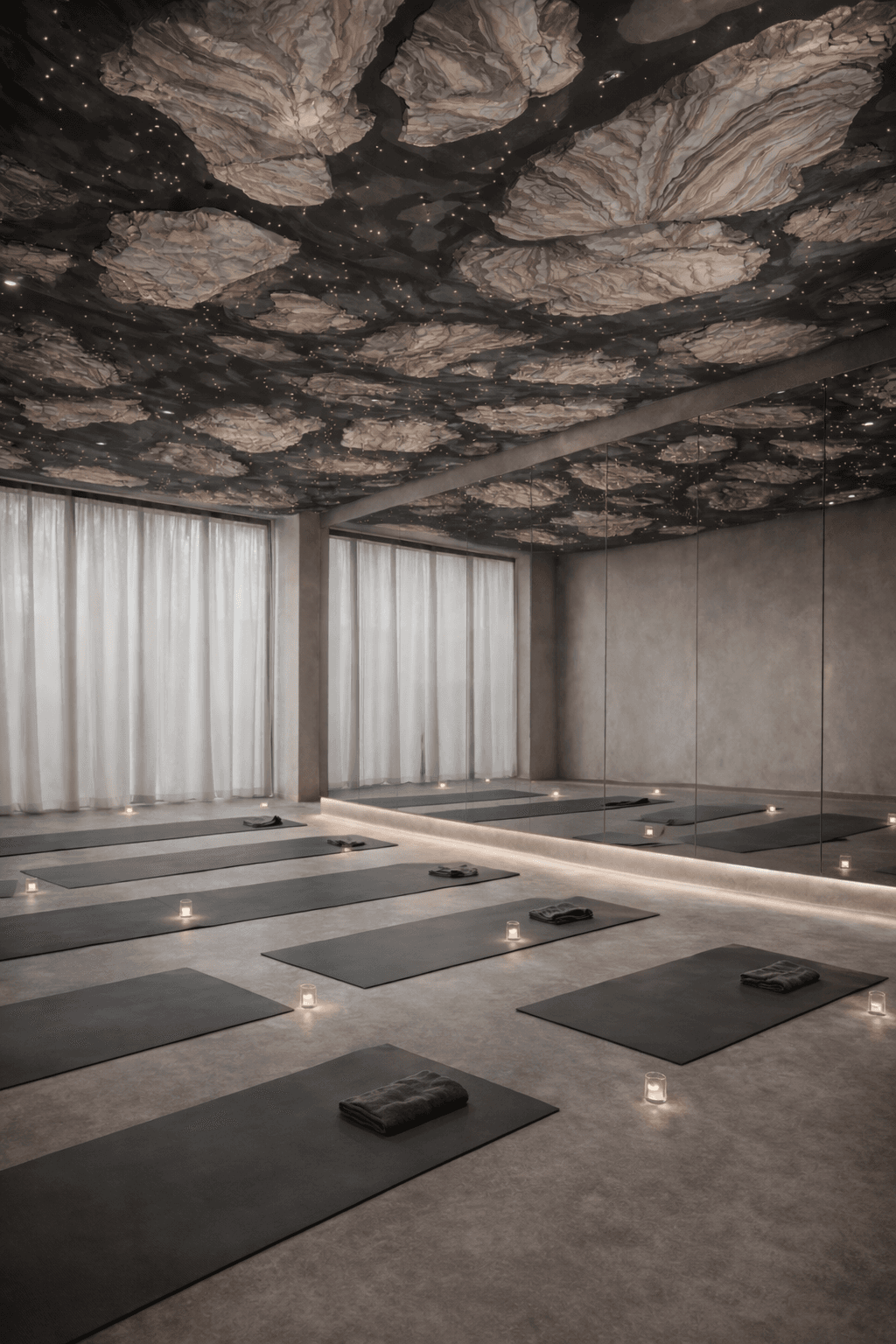
Mat classes, barre, yoga and infrared hot sessions share the second room, a bright space with arched mirrors and room to move.

If your first class is on the mat, this is where you will be. Everything is provided; you bring grip socks, water and, for a hot class, a towel.

Choosing your first class

Mat or reformer first?

There is no wrong door. Both formats welcome beginners; they just teach differently.

On the mat

Nothing but a mat, a few props and your own body weight

On the reformer

A sprung carriage that assists as much as it resists

The reformer looks technical, but for beginners the springs mostly help: they support you into positions your own strength cannot hold yet.

On the mat

Teaches the vocabulary: breath, neutral spine, control

On the reformer

Teaches the equipment while giving you instant feedback

On the mat you learn what the words mean. On the reformer, the carriage tells you the moment control slips, which is its own kind of teacher.

On the mat

Feels like focused, precise floor work

On the reformer

Feels like guided, gliding strength work

Both run at a deliberate pace, and neither is trying to exhaust you.

On the mat

Choose it for foundations you can practice anywhere

On the reformer

Choose it for support and structure from minute one

Whichever you pick first, most people end up doing both. The practices feed each other.

Before you talk yourself out of it

Nervous? Everyone is.

Almost everyone turns up with the same quiet doubts. Here is why none of them last past the first class.

Worry 01

“Will everyone be better than me?”

Some people will have more experience. Nobody is watching you. Everyone is busy with their own carriage.

Worry 02

“Will I understand the equipment?”

Yes. Your instructor explains everything before you touch it, and the reformer is far simpler in practice than it looks in photos.

Worry 03

“What if I can’t do a movement?”

You take the easier version. Nobody expects you to nail every movement on day one.

Worry 04

“Will it be hard?”

A good beginner class works you while keeping you in control the whole way through.

Worry 05

“Do I need to be flexible first?”

No. Flexibility is something Pilates builds over time, not something you need before you start.

Studio vocabulary

Six words you will hear in the first ten minutes

Carriage
The moving platform of the reformer. It glides on rails as you press and pull.
Springs
The resistance under the carriage. Heavier is not always harder: some springs are there to help you.
Footbar
The bar at the end of the reformer you press through with feet or hands. Your instructor sets it for you.
Neutral spine
Your spine's natural curves, neither flattened nor arched. Most exercises start here.
Tabletop
Knees over hips, shins level with the floor. A home base for core work.
The hundred
A classic warm-up: small arm pumps with steady breath. You will meet it early, and it is friendlier than it sounds.

Good to know

Questions, answered

Is Pilates good for complete beginners?
Yes. Classes are labelled by level, so you can start with a beginner-friendly mat or reformer session where the pace and teaching are built for first-timers. If you would rather have one-to-one support first, private sessions can be arranged on request.
Do I need to be flexible to start Pilates?
No. Flexibility comes from doing Pilates, it is not something you need beforehand. Instructors offer an easier range for every movement, and mobility improves steadily as you train.
How early should I arrive for my first Pilates class?
Ten minutes early. That covers check-in, meeting your instructor and getting set up on your mat or reformer, and it leaves you a moment to mention it is your first visit.
Do I really need grip socks?
Yes, for reformer and mat classes. They are required for hygiene and grip, and they make a real difference on the reformer carriage. Regular socks are too slippery and bare feet are not allowed.
Will I be sore after my first Pilates class?
Probably a little, usually in the deep core, inner thighs and upper back a day or two later. It is mild, it passes quickly, and gentle movement and water help.
Can I do my first class if I have an injury or I am pregnant?
Speak to your doctor first. Once you are cleared, note the condition in your member profile and tell your instructor before class so they can adjust the movements for you throughout the session.


Sources

Two sources inform the practical guidance above. Neither shows that a class produces a particular result for you.

  1. Delayed onset muscle soreness: treatment strategies and performance factors

    A Sports Medicine review of post-exercise soreness. It informs the guidance that mild soreness after unaccustomed exercise is normal and settles on its own. Not a Pilates-specific study.

  2. Pilates for improvement of muscle endurance, flexibility, balance, and posture

    A twelve-week trial of two Pilates classes a week in adults, which informs the two-classes-a-week suggestion. It found improvements in muscular endurance and flexibility, though not in every measure it tracked.

Keep reading

Saadiyat Island, Abu Dhabi

Begin your Bare ritual.

We open soon. Founding memberships are open by invitation: leave your details and your invitation opens straight away.