Training guide

Pilates for padel players

Pilates is one of the most useful ways for padel players to train off the court. The game runs on rotation, lunging, overhead shoulder work and sharp changes of direction, and Pilates strengthens exactly those patterns, slowly and under control. It builds the core and hip strength that let you swing hard and stop fast without your joints absorbing the difference.

Bare Wellness is a boutique Pilates and yoga studio opening inside Bloom Arjaan on Saadiyat Island in Q3 2026, a short drive from the courts of central Abu Dhabi. With a ten-reformer studio, small technical classes and a timetable of more than sixty sessions a week, it is built for people who train around a sport, not instead of one.

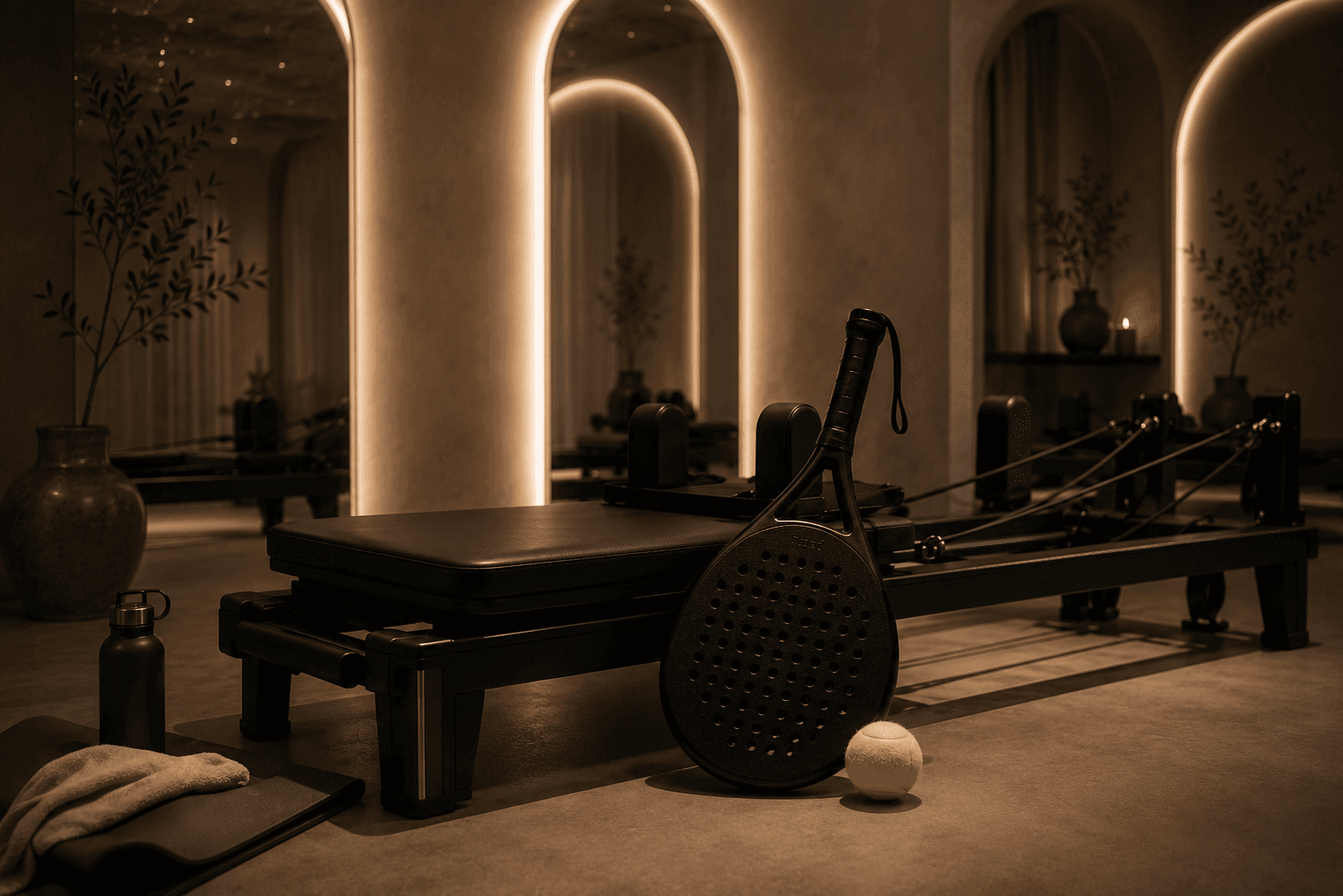
A padel racket and ball resting against a reformer in the softly lit Bare Wellness studio

— At a glance

What Pilates gives your game

  • Rotation with control

    Padel strokes turn from the hips and mid-back. Pilates trains that rotation slowly and under resistance, so power on court comes with control.

  • Shoulder support

    Bandejas and smashes load the shoulder overhead again and again. Controlled pressing and pulling work builds the stability that repetitive strokes rely on.

  • Stronger lunges

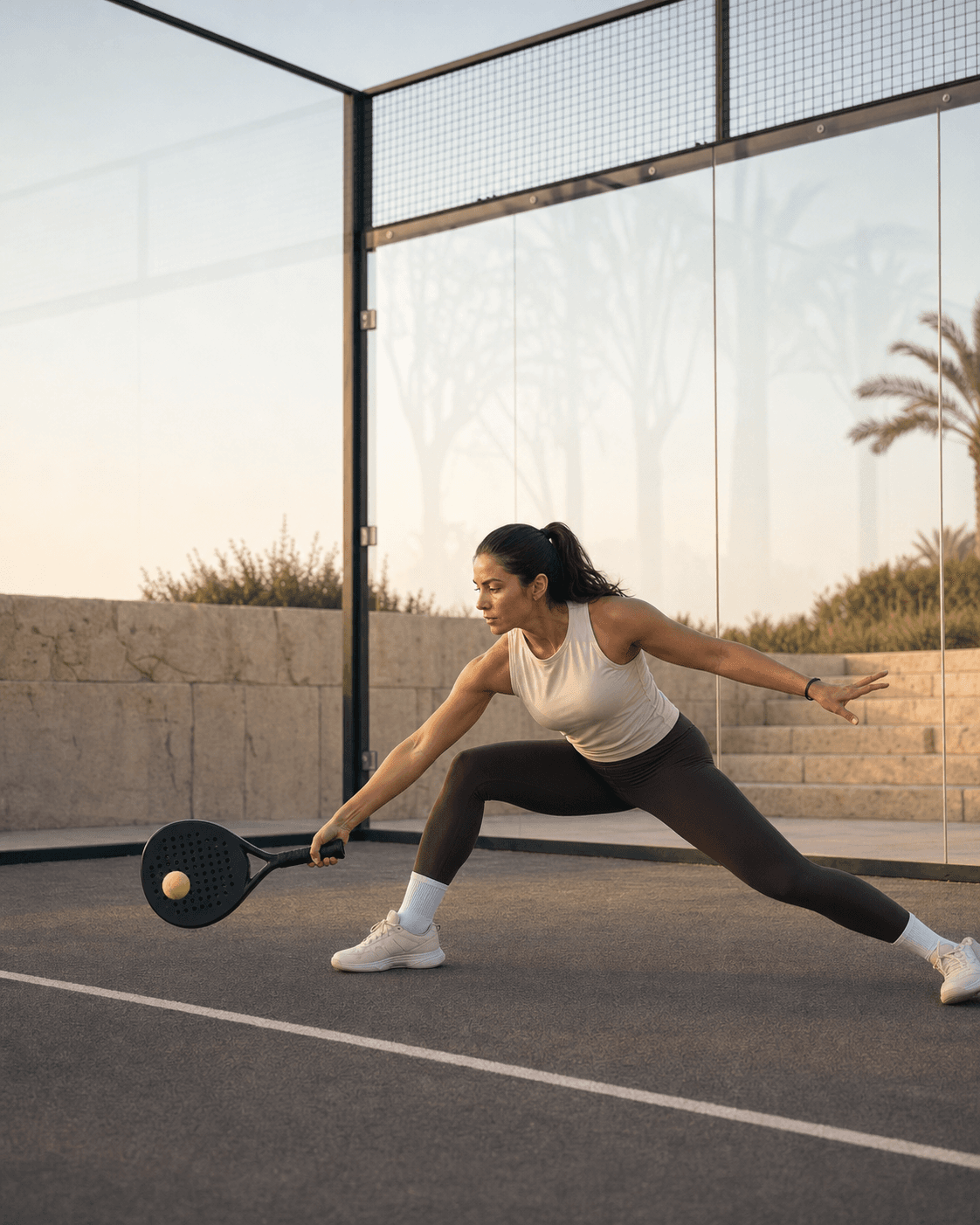
    Single-leg and split-stance work mirrors the low volleys and deep reaches of a match, building strength through the exact ranges you play in.

  • Low-impact balance

    A reformer session loads the body without pounding it, so it sits comfortably next to court days instead of competing with them.

Why padel players are adding Pilates

Padel has grown faster in the UAE than almost anywhere, and most players here play several times a week. The game is generous to beginners and hard on habits: the same crouched ready position, the same dominant-side swing, the same sprints to the glass, repeated for hours. Very few players balance that with any training built around what the sport actually asks of them.

Pilates fills that gap well because it is specific without being complicated. It works both sides of the body evenly, strengthens the trunk that every stroke passes through, and does it all at low impact. Like most Pilates for athletes, the point is not to replace your sport. It is to support the hours you already spend playing it.

Rotation is the heart of the game

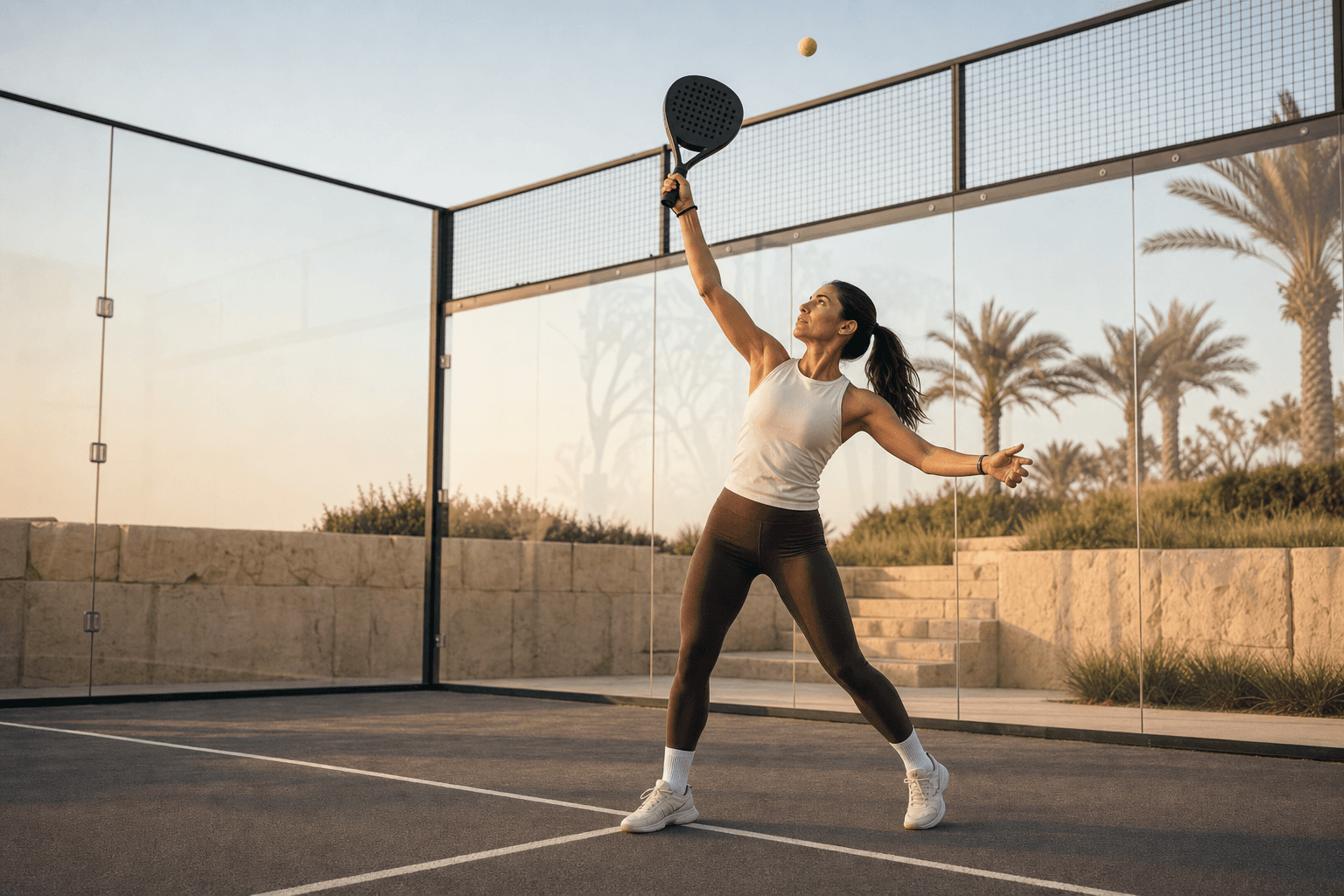
Almost every padel stroke is rotational. The bandeja, the vibora and even a simple forehand are driven by the hips and mid-back turning together, with the arm finishing what the trunk starts. When rotation comes from the trunk, strokes are heavier and the elbow and shoulder work less. When it comes from the arm alone, they work overtime.

Pilates trains rotation more deliberately than almost any other method. Oblique series, spine twists and rotational work against spring resistance in reformer Pilates classes teach you to generate a turn, control it through its full range and stop it cleanly. That last part matters on court, where every swing has to end in a recovery step.

Shoulders, lunges and changes of direction

Overhead shots are where padel gets demanding. A smash or bandeja asks the shoulder blade to stay anchored while the arm accelerates, and that anchoring comes from muscles most players never train directly. Pilates pressing, pulling and plank work builds that support patiently, with the springs providing feedback the moment the shoulder starts to drift.

The lower body gets the same treatment. Lunges, split squats on the carriage and single-leg footwork strengthen the positions you actually play from: low, wide and often on one leg. And because changing direction is really about slowing down before you speed up, the slow eccentric work Pilates is known for translates directly into cleaner stops and quicker first steps.

Built to keep you on court

Padel players tend to collect the same complaints: a grumbling elbow, a stiff lower back, a shoulder that protests overheads. Pilates does not treat or cure any of that, and anyone playing through pain should speak to a doctor before adding new training. What it can do is address the imbalances that repetitive, one-sided sport quietly builds.

Training both sides evenly, strengthening the trunk and hips, and moving joints through their full range under light load all support a body that copes better with the demands of the game. At Bare Wellness you can also flag injuries or conditions in your member profile, so instructors know to offer modifications before class begins.

Fitting Pilates around your padel week

For most players, one or two Pilates sessions a week alongside regular matches is plenty. Keep the harder reformer work away from your most competitive days at first, since your legs will feel it, and treat slower mat or yoga classes as recovery that still earns its place. More detail on training frequency is in our guide to how often you should do Pilates.

The studio timetable makes this easy to sustain. More than sixty classes a week run across mornings, evenings and weekends, booking works through the website or the iOS app, and cancellation is free up to six hours before class, which suits a padel calendar that changes at short notice. A simple starting week might look like this:

  • Two padel matches on your usual days
  • One reformer class for loaded rotation, lunges and shoulder work
  • One mat or yoga class for mobility and recovery
  • A rest day between your hardest sessions

— Good to know

Frequently asked

Is Pilates good for padel players?
Yes. Padel is built on rotation, lunging and overhead shoulder work, and Pilates strengthens all three at low impact. It also trains both sides of the body evenly, which a one-sided racquet sport never does on its own.
Can Pilates help with padel elbow?
Pilates does not treat or cure elbow pain, so speak to a doctor first if you are playing through it. Once you are cleared, building rotation from the trunk and support around the shoulder can reduce how much work the arm does on every stroke.
How many Pilates sessions a week do padel players need?
One or two sessions a week alongside your matches is a strong rhythm for most players. Consistency matters more than volume, so pick slots you can hold across the season rather than loading up one week and skipping the next.
Should I do Pilates before or after playing padel?
Either works. On a match day, a lighter mat class earlier on can serve as a long warm-up. Heavier reformer sessions are better kept for separate days, since tired legs change how you move on court.
Is reformer or mat Pilates better for padel?
Both help. The reformer adds spring resistance to rotation, lunges and shoulder work, which suits players chasing strength. Mat classes sharpen core control and body awareness with nothing but your own weight. Many players alternate the two across the week.
When does Bare Wellness open?
The studio opens in Q3 2026 inside Bloom Arjaan on Saadiyat Island, Abu Dhabi, a short drive from central Abu Dhabi over the Sheikh Khalifa Bridge. Founding memberships open ahead of the studio, and the full timetable publishes before launch.

— Keep reading

— Saadiyat Island, Abu Dhabi

Begin your Bare ritual.

We open in Q3 2026. Leave your details and be the first to know when founding memberships and the schedule go live.